Why Your Brain Treats Losses Differently Than Gains
Your brain is wired to protect you from losses. That same wiring costs you money in trading.
In 1979, psychologists Daniel Kahneman and Amos Tversky published a paper that changed how we understand decision-making. Their research on prospect theory revealed something uncomfortable: humans feel the pain of a loss roughly twice as intensely as the pleasure of an equivalent gain. Lose $100 and you’ll feel worse than the satisfaction you’d get from finding $100.
This isn’t a personality flaw. It’s a feature of human cognition that evolved to keep us alive. But in financial markets, it creates a predictable pattern of bad decisions.
The endowment effect in your portfolio
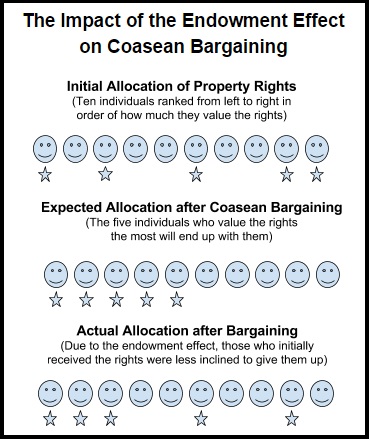
Photo by Smandava17 on Wikimedia Commons

Here’s a simple test. Someone offers you a coffee mug worth $10. How much would you pay for it? Now imagine you already own that mug. How much would you sell it for?
Research consistently shows that people demand two to three times more to sell something they own than they’d pay to buy the same item. This is the endowment effect, and it’s everywhere in trading.
Traders hold losing positions far longer than they should because selling feels like admitting defeat. The stock they bought at $50 is now at $35, and they’re waiting for it to “come back.” Meanwhile, that capital is locked in a position that’s costing them opportunities elsewhere.
A 2023 study by the Journal of Finance found that retail investors held losing positions an average of 47 days longer than winning ones. The result? Their portfolios underperformed the market by 2.1% annually.
Why you sell winners too early

Photo by Nennieinszweidrei on Pixabay
The flip side of loss aversion is the disposition effect. Traders tend to sell winning positions too quickly, locking in small gains while letting losses run. It feels good to book a profit, even a modest one. It feels terrible to watch a gain evaporate.
This creates a pattern where your portfolio slowly bleeds. You sell your winners at 10% or 15% gains and hold your losers through 30% or 40% declines. The math doesn’t work, but the psychology does.
Behavioral finance researcher Terrance Odean analyzed 10,000 brokerage accounts and found that investors were 1.5 times more likely to sell a winning stock than a losing one. The stocks they sold went on to outperform the ones they kept by an average of 3.4% over the next year.
The anchoring trap

Photo by tranhao on Pixabay
When you buy a stock at $100, that number becomes your anchor. Every future price is measured against it. If the stock drops to $80, you see a $20 loss. If it rises to $120, you see a $20 gain.
But the market doesn’t care what you paid. The stock’s value is determined by future earnings, market sentiment, and macroeconomic factors. Your purchase price is irrelevant to everyone except you.
Anchoring leads traders to make decisions based on their entry point rather than current fundamentals. They’ll refuse to sell a stock that’s dropped 50% because they’re waiting for it to return to their purchase price, even when the company’s prospects have fundamentally changed.
How greed compounds the problem

Photo by Peggychoucair on Pixabay
The psychology of greed in trading works differently than you might expect. It’s not about wanting more. It’s about the fear of missing out on gains you can see.
When a stock you own rises 20%, you feel smart. When it rises 50% after you sold at 20%, you feel regret. That regret is more powerful than the satisfaction of the original gain, and it drives increasingly aggressive behavior.
Traders who experience this pattern often take larger positions, use more leverage, and hold longer than their risk management rules allow. A 2024 report by the CFTC found that retail traders who experienced a “missed gain” of more than 30% were 2.3 times likely to increase their position size in the next trade.
Breaking the cycle

Photo by DFID – UK Department for International Development on Wikimedia Commons

The first step is recognizing that your brain is not a reliable judge of financial risk. The emotions that kept your ancestors alive on the savanna are the same ones that make you sell winners and hold losers.
Professional traders use systematic rules to override their instincts. Stop-losses that trigger automatically. Position-sizing formulas that remove emotion. Regular portfolio reviews that force honest assessment of every holding.
The goal isn’t to eliminate emotion. That’s impossible. The goal is to build systems that make good decisions even when your brain is telling you to do the opposite.
Understanding the psychology of greed in trading isn’t about becoming a robot. It’s about knowing when your instincts are helping you and when they’re costing you money. Most of the time, in financial markets, they’re costing you money.
—
This article is for informational purposes only and does not constitute financial advice.